What Work Is
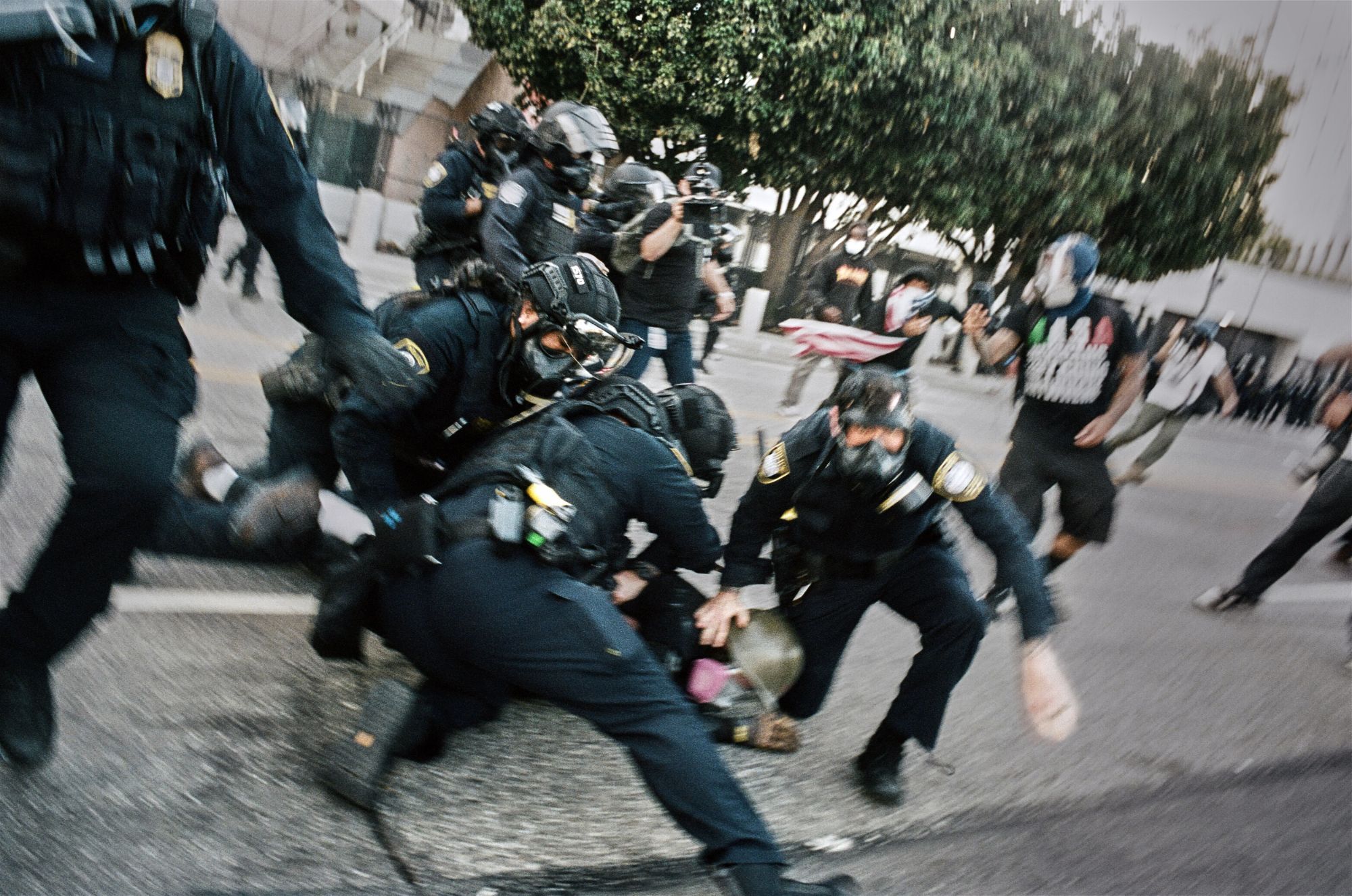
When the feds charge with rubber bullets and stun grenades and the protesters with their homemade shields and REI bicycle helmets try to hold their ground and then the tear gas comes and someone incongruously starts playing the bagpipes, it's easy to feel like Robert Duvall in Apocalypse Now—on the beach as mortars land in the waves while soldiers surf and napalm burns the jungle.
But really, all of us were closer to being in that Gilbert and Sullivan play I was in as a seventh grader: we kind of knew our lines, but the feeling of potential chaos hung in the air.
At some of the protests outside the federal buildings, there was a group hanging around the edges. They didn't seem to be there for a specific cause. It looked more like they were looking for someone to fight. So were the feds. They found each other in the Minneapolis snow and the LA heat. These protesters invariably wore all black: black boots, black canvas pants, masks, Home Depot goggles, and black handkerchiefs around their faces.
On the other side, the federal agents were weighed down by all the gear they could find: handguns, mace, tear gas, zip ties, batons, rubber-ball launchers, sometimes AR-15s, ammo and backup ammo, knee pads, Oakley sunglasses, and covered name tags. They wanted to make sure they were ready for anything. Whether you needed to hog-tie someone, or gas someone, or change a tire, they were prepared.
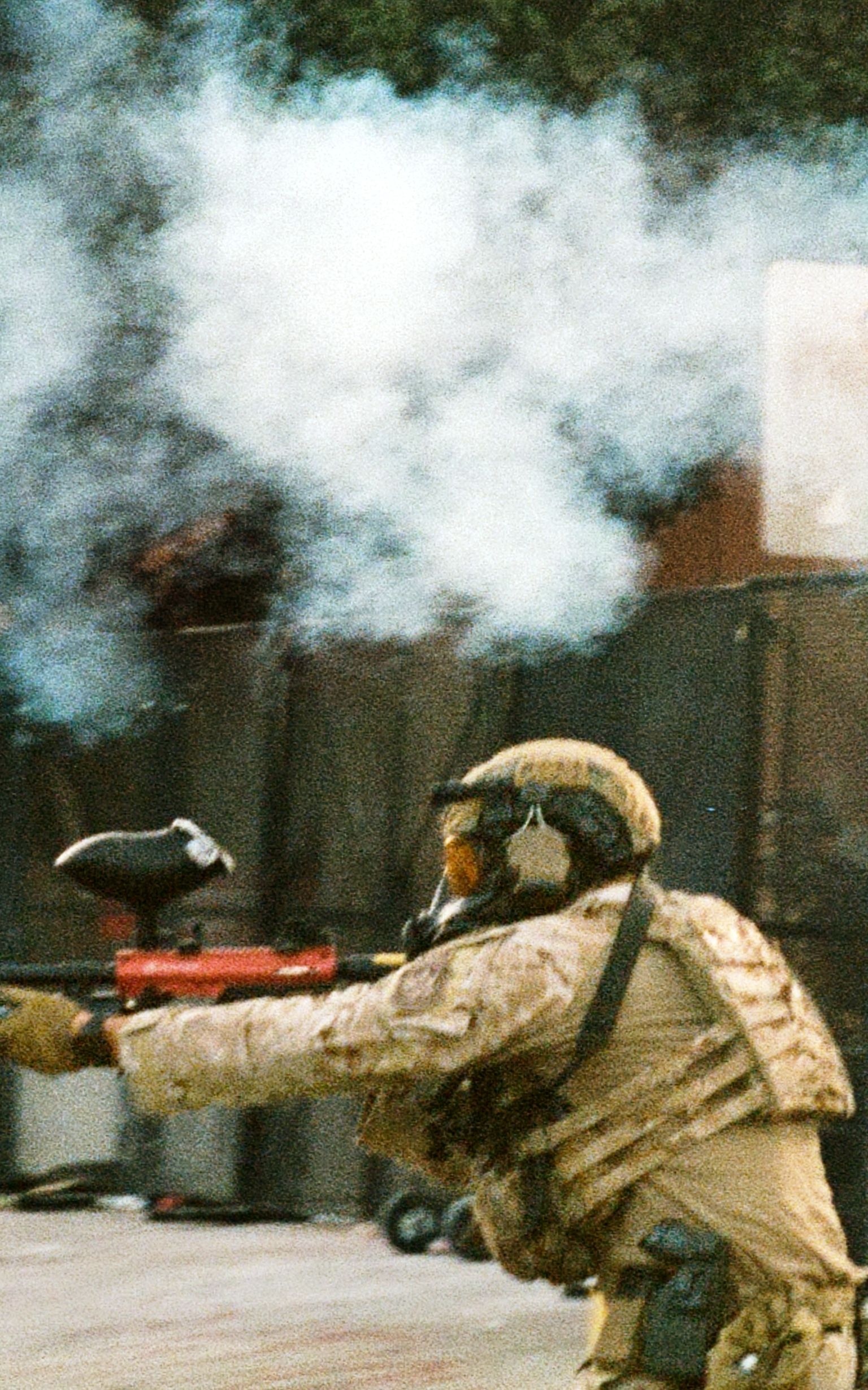
While most of the crowd carried signs and made speeches, the ones on the edges waited in the wings. On cue, they threw water bottles, then rocks, and when the concrete came out, the ICE agents got fed up and moved in.
After the agents retreated, everyone would do a wellness check. The photographers would ask each other, "You good?" The protesters' medics would flush out tear-gassed eyes. As the feds pulled back, they would walk backwards, their hands on each other's shoulders, doing a head count.
I was often in the middle, getting as close as I could with a wide lens. Close enough that when I got bumped by a police horse, I could feel its size, power, and fear. Close enough to get blinded by pepper spray from three feet away. It felt like this was where I was supposed to be. This is work.
Then I thought about the people I had seen in Minneapolis. During the siege, I saw observers all over the city standing on street corners in the coldest winter, watching for agents, armed with only a cell phone. They followed the agents and blew whistles in warning and were pulled out of their Subarus and beaten.
The protests at the federal buildings were exciting and felt glamorous. I liked being in the center of the action. But nothing is less glamorous than standing on a street corner in the dead of winter. That was the work, and they did it for weeks.
Thinking about why I am making the pictures matters, but it only gets me so far. When I was a 17-year-old intern at The Baltimore Sun, I asked Ken Paik, the director of photography, to look at my portfolio. He said the same thing I have heard every time my photographs have been critiqued: "These are good. Now go take more."