California City
Scrub plants in the Mojave Desert either send their roots deep into the earth, searching for underground pockets of water, or grow large, shallow mesh networks to catch every drop of rain. Kangaroo rats extract all the moisture they need by metabolizing dry seeds, and sidewinder rattlesnakes get theirs by eating the rats whole.
There is a giant prison in the middle of the desert called the California City Detention Facility. At night, you can see it from miles away: a thin strip of white against the black desert.
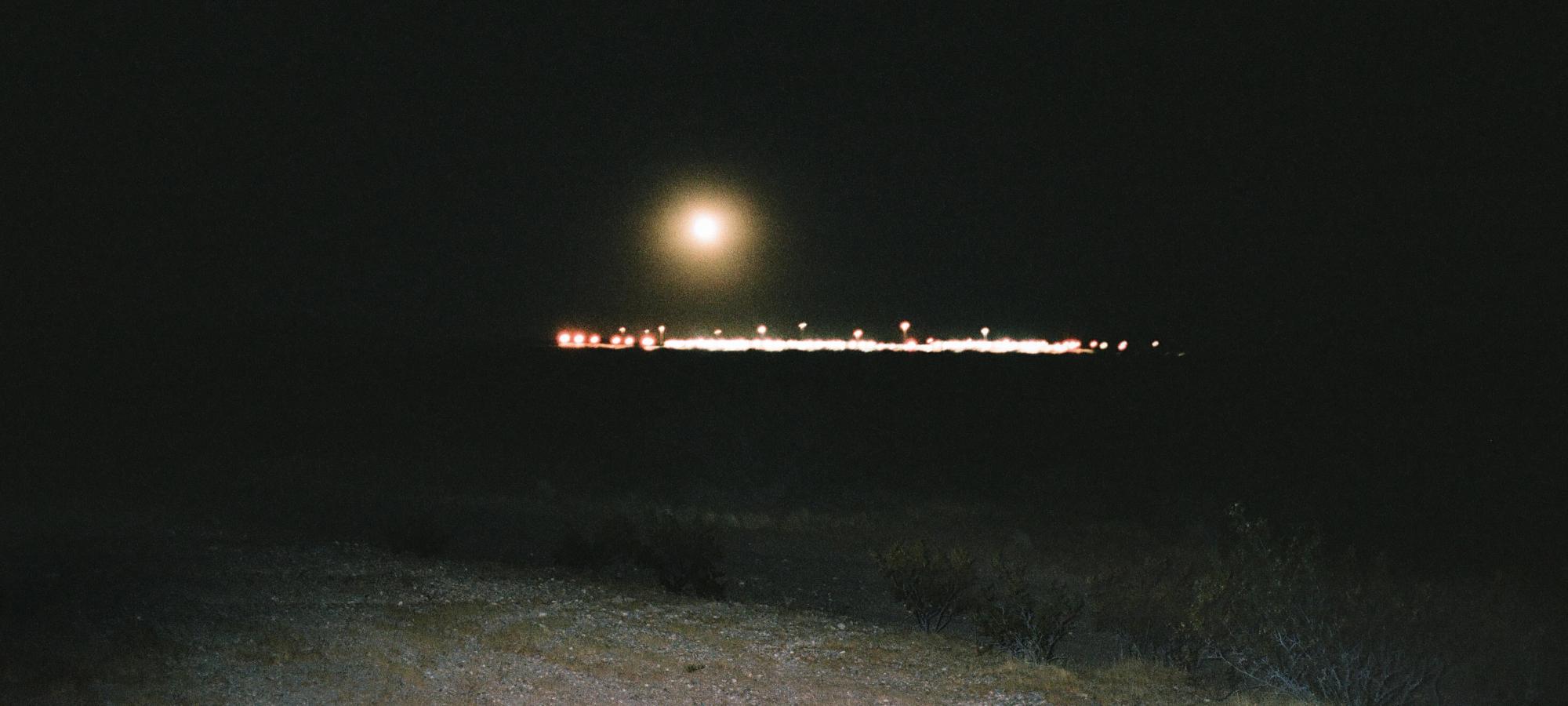
After you drive through the small prison town of California City, make that right-hand turn onto 20 Mule Team Parkway, and pass the Desert Tortoise Research Natural Area, you feel like the end of the world is behind you.
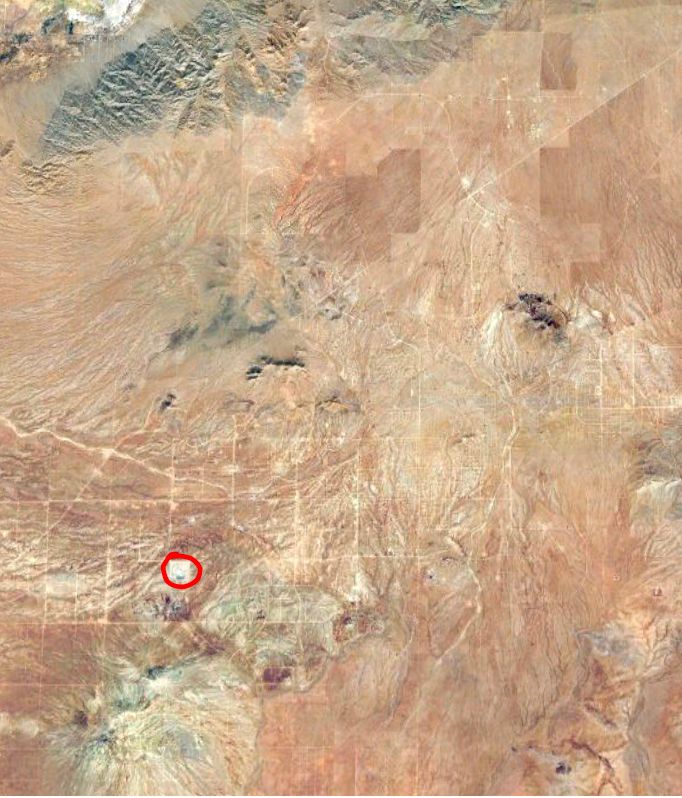
In Kern County's version of "I have some oceanfront property in Arizona," developers were prosecuted for fraud in the 1970s for selling 80,000 lots on the promise of unlimited water. As any kangaroo rat will tell you, there is very little water here.
In the mother of all dystopian spec builds, CCA, a for-profit prison contractor later rebranded as CoreCivic, finished it in 1998, hoping to find a tenant. It housed federal and then state inmates on and off until it closed in 2024. It reopened in 2025 as one of the largest ICE detention centers in the U.S., with a capacity of 2,560.
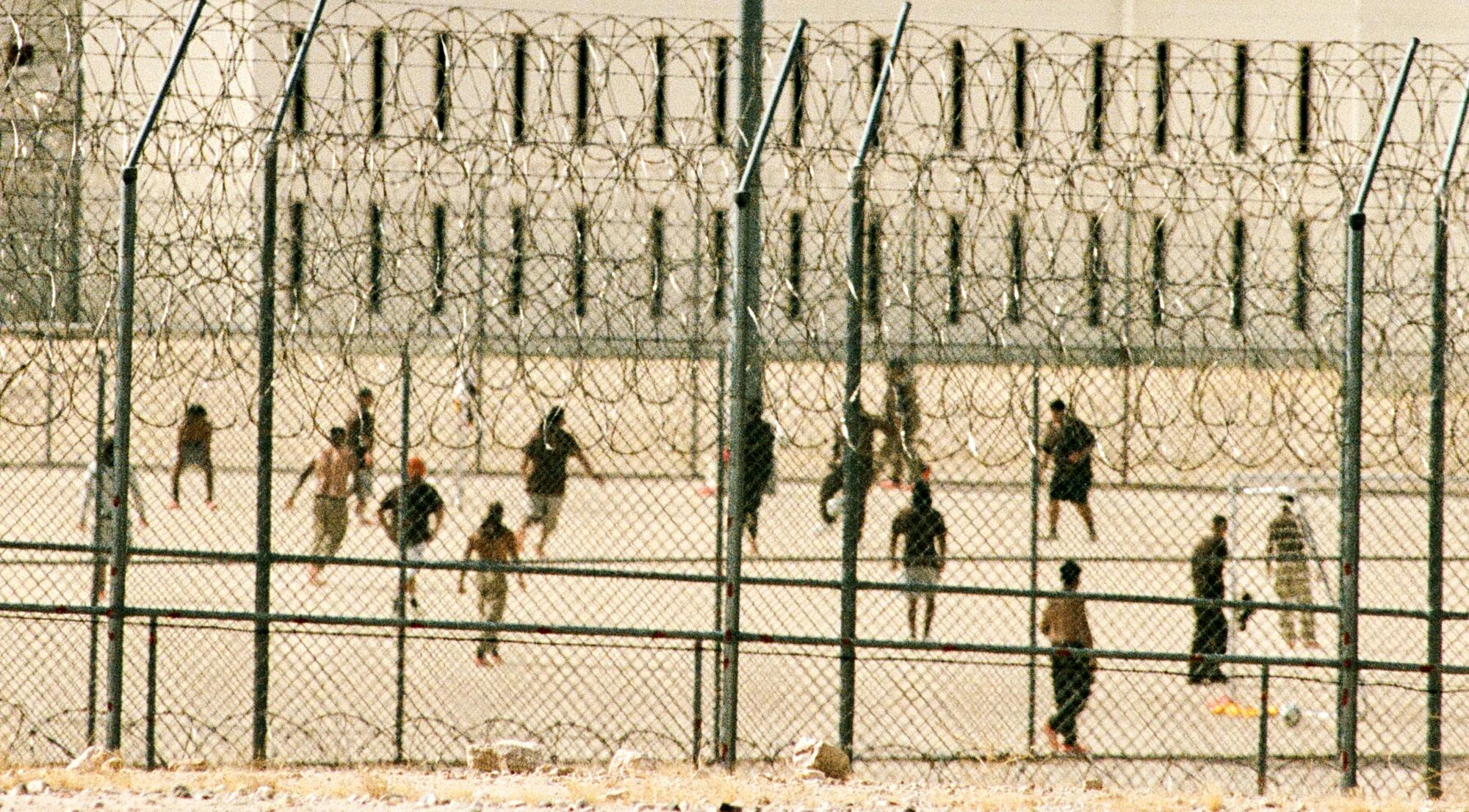
In order to get the angle I wanted, I would sometimes climb a hill hundreds of yards to the north of the facility. For thousands of acres, there was nothing around me but sand, brush, and the prison. When I looked up the property lines to make sure I wasn't trespassing, I learned I was not, in fact, in an empty desert. According to the city map, I was standing at the corner of Trask Ave. and Baker Street, in the middle of a master-planned community with the best schools and the most beautiful views you can imagine. Who are you going to believe? Me, or your own lying eyes? Only closers get coffee.
The first time I went to the California City Detention Facility, I made that right turn onto Virginia Blvd. and drove up the hill adjacent to the prison. I was immediately approached by a CoreCivic guard. I got out of my car. He got out of his white pickup. He wore a blue uniform and what could only be described as a vest purchased on Temu. I wore a PRESS T-shirt bought on Amazon.
He said I couldn't take pictures; I assured him I could and was happy to show him the relevant statutes and property lines. He said some of the prisoners were gang members and that it wasn't safe for them to be photographed. I told him that was highly unlikely. Who would use a film camera from the 1950s to scope out a prison? His radio buzzed; I got back in my car.
CoreCivic's solution was to have the guard pull his truck in front of my camera. I would point the lens to the right. He would pull forward. I would point it to the left. He would back up. I would throw in a head fake, and we would both feel embarrassed by the absurdity of our roles. We were the same age. His job was to use a small pickup to block my view of a building the size of an Amazon warehouse, and mine was to swing the camera back and forth. It felt humiliating—two men in their fifties playing a childish game.
And so began our relationship. Over the next few months, I would show up. He would drive over. He made up more reasons I couldn't take pictures. I could be collaborating with the drug cartels. I was trespassing (I was not). The inmates had a right to privacy, and he was just looking out for their welfare.
I stopped getting out of the car and didn't roll down my window when approached. The humiliation passed.
I have to work against my instinct to make a beautiful photograph. My inclination is to wait until the light is diffuse at the end of the day—it only lasts a couple of minutes—and then say, "Look how the shapes of the barbed-wire fence and the warehouse-like building are echoed by the Mars-like hills in the distance. What a great photographer I am!"
The most successful picture I made of California City is the one I took with a point-and-shoot camera on my way out of town late at night in the middle of the summer. The image is a little bit out of focus. You can see my headlights illuminating the sand in front of my car. The moon over the buildings looks like a searchlight.